
South Bend • Granger • Mishawaka
Forestry Mulching in Northern Indiana
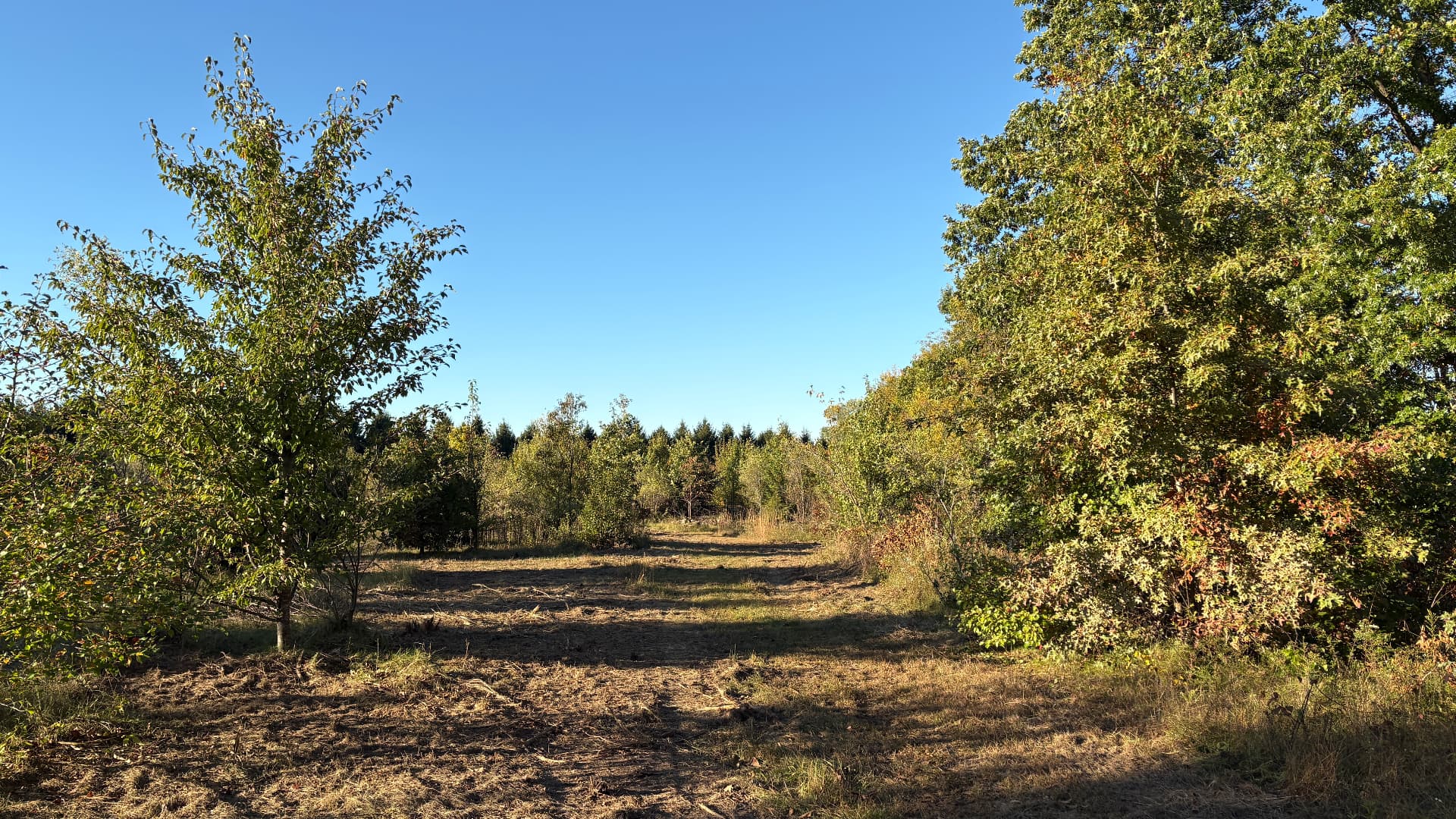
Forestry mulching uses a mulching head to grind trees, brush and undergrowth into a layer of mulch right where they stand — clearing land in a single pass without piles to burn or haul.
What is forestry mulching?
In plain terms: a machine with a spinning drum of steel teeth grinds standing brush and small trees into wood chips, right where they grow. There's nothing to pile, burn or haul off. What's left is open ground covered with a layer of mulch.
Why property owners choose forestry mulching
Where it fits the project, forestry mulching is an efficient way to clear land:
- Vegetation is processed on-site — no burn piles or debris hauling
- Mulch layer helps protect soil from erosion
- Less ground disturbance than pushing and piling
- Selective — mature trees can stay
- Works well on overgrown acreage, trails and fence lines
When forestry mulching isn't the right call
Mulching isn't ideal for every job. A future building pad, driveway or area that will be graded may need the organic layer removed. We'll tell you plainly if a different method would serve the project better.
What happens after mulching
Mulching clears the existing vegetation, but it doesn't make a property permanently maintenance-free. The organic material left behind stays on the ground and breaks down naturally — generally over approximately 12–18 months, depending on how much was mulched, weather, moisture, soil and site conditions. That's a general expectation, not a guarantee.
Once it has broken down, new vegetation can start to establish again. Periodic mowing or brush hogging keeps the cleared area open.
- Clearing: we mulch the existing unwanted vegetation to reclaim the property
- Decomposition: the mulch breaks down over time on the ground
- Maintenance: regular mowing or brush hogging keeps it open
Forestry mulching across the region
We provide forestry mulching throughout Granger, South Bend, Mishawaka, Elkhart, Goshen and surrounding Northern Indiana communities — for acreage, wooded lots and overgrown property alike.
Common questions
How big of trees can be mulched?
It depends on the species, density and equipment. Larger trees may need to be felled and handled separately. Send photos and we'll advise.
How long does the mulch take to break down?
Mulched vegetation generally decomposes over approximately 12–18 months, though the actual rate depends on the amount of material, weather, moisture, soil and other site factors. After that, periodic mowing or brush hogging keeps the area open.
Will mulching make my property maintenance-free?
No. Mulching clears the existing vegetation, but it doesn't permanently prevent new growth. Once the material breaks down, plan on periodic mowing or brush hogging to keep the area clear. Clearing reclaims the property; maintenance keeps it reclaimed.
How much does forestry mulching cost?
It depends on acreage, vegetation density, tree size, terrain and access. We quote each job after reviewing the property — photos and a location are the best place to start.
What does the ground look like after?
Expect a layer of shredded wood mulch over the cleared area that breaks down over time. In many cases it can also be seeded through.
Request a quote
Under construction
Our online quote system is still under construction. Send your property details straight to ridgelinewrx@gmail.com or call (574) 273-7868 and we'll get back to you with a scope and estimate.
Ready to reclaim your property?
With 27 years of heavy equipment industry experience, send us the location, rough acreage and a few photos. We'll review the job and get back to you with a clear scope and quote.